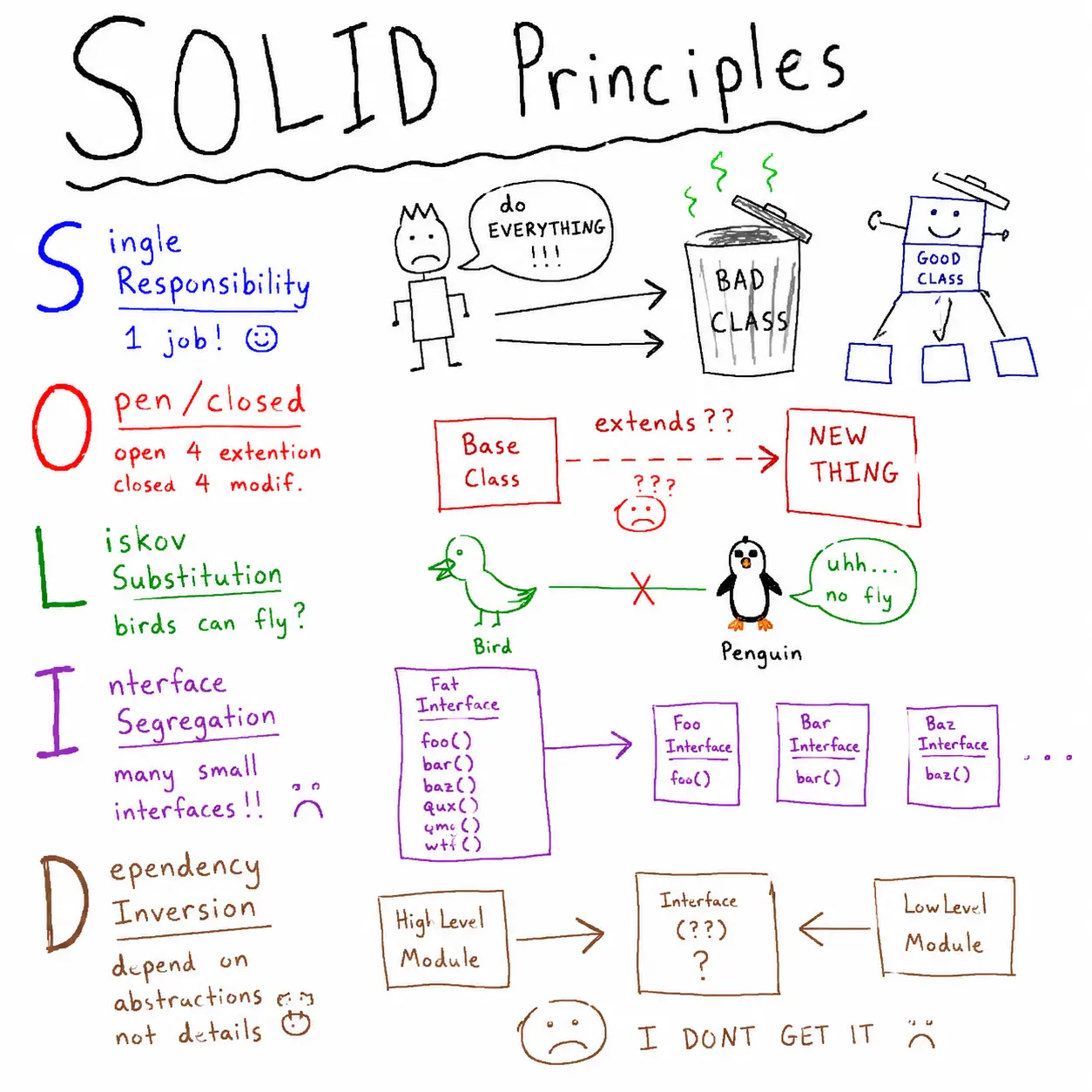
SOLID is a set of five object-oriented design principles that helps developers write code that is easier to change, test, and maintain.
This page is an index for my SOLID series in Java.
Each article explains one principle with simple Java examples and backend-focused scenarios.
Articles in This Series
1. Single Responsibility Principle
Single Responsibility Principle in Java: One Class, One Reason to Change
The Single Responsibility Principle says that a class should have one responsibility and one reason to change.
Read the article:
Single Responsibility Principle in Java
2. Open/Closed Principle
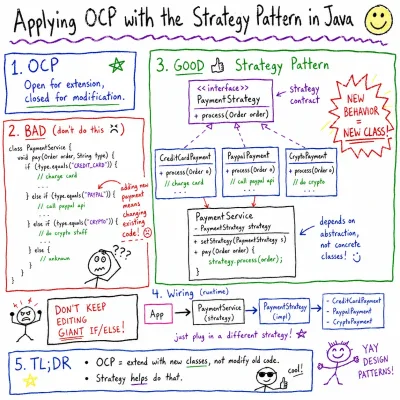
Open-Closed Principle in Java: Open to Extension, Closed to Modification
The Open/Closed Principle says that code should be open for extension but closed for modification.
Read the article:
Open-Closed Principle in Java
3. Liskov Substitution Principle
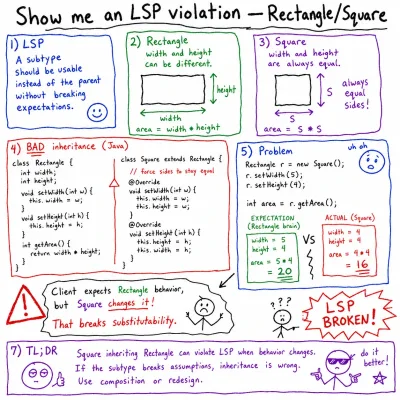
Liskov Substitution Principle in Java: Subclasses Should Replace Parent Classes Safely
The Liskov Substitution Principle says that a child class should be able to replace its parent class without breaking the program.
Read the article:
Liskov Substitution Principle in Java
4. Interface Segregation Principle
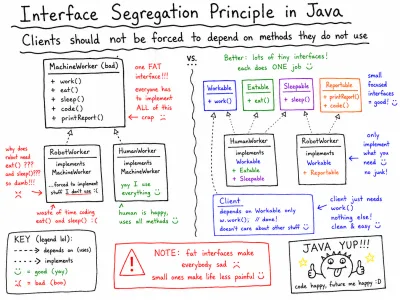
Interface Segregation Principle in Java: Many Small Interfaces Over One Large Interface
The Interface Segregation Principle says that a class should not be forced to depend on methods it does not use.
Read the article:
Interface Segregation Principle in Java
5. Dependency Inversion Principle
Dependency Inversion Principle in Java: Depend on Abstractions, Not Concrete Classes
The Dependency Inversion Principle says that business logic should depend on abstractions, not concrete implementations.
Read the article:
Dependency Inversion Principle in Java
Recommended Reading Order
I recommend reading the articles in this order:
- Single Responsibility Principle
- Open/Closed Principle
- Liskov Substitution Principle
- Interface Segregation Principle
- Dependency Inversion Principle
This order follows the SOLID acronym and makes the concepts easier to connect.
Summary
This series explains the SOLID principles with practical Java examples.
The goal is not just to memorize the definitions, but to understand how these principles help us design backend code that is easier to maintain.